



Mental health care is changing. Around the world, clinics and therapists are focusing more on prevention and education rather than only treating people after a crisis begins. This shift is creating new opportunities for mental health professionals and changing how care is understood and delivered. However, there is still a common belief that leaders in this field should come from large, well-known countries, while professionals from smaller nations are often overlooked.
This gap is particularly visible in psychotherapy. Training programmes, professional networks and international recognition have often favoured practitioners from larger systems, leaving clinicians from smaller countries with the added challenge of proving their expertise. Building credibility takes more than strong clinical skills. It requires years of education, discipline, and the courage to represent your country on an international stage that was not always designed to include you.
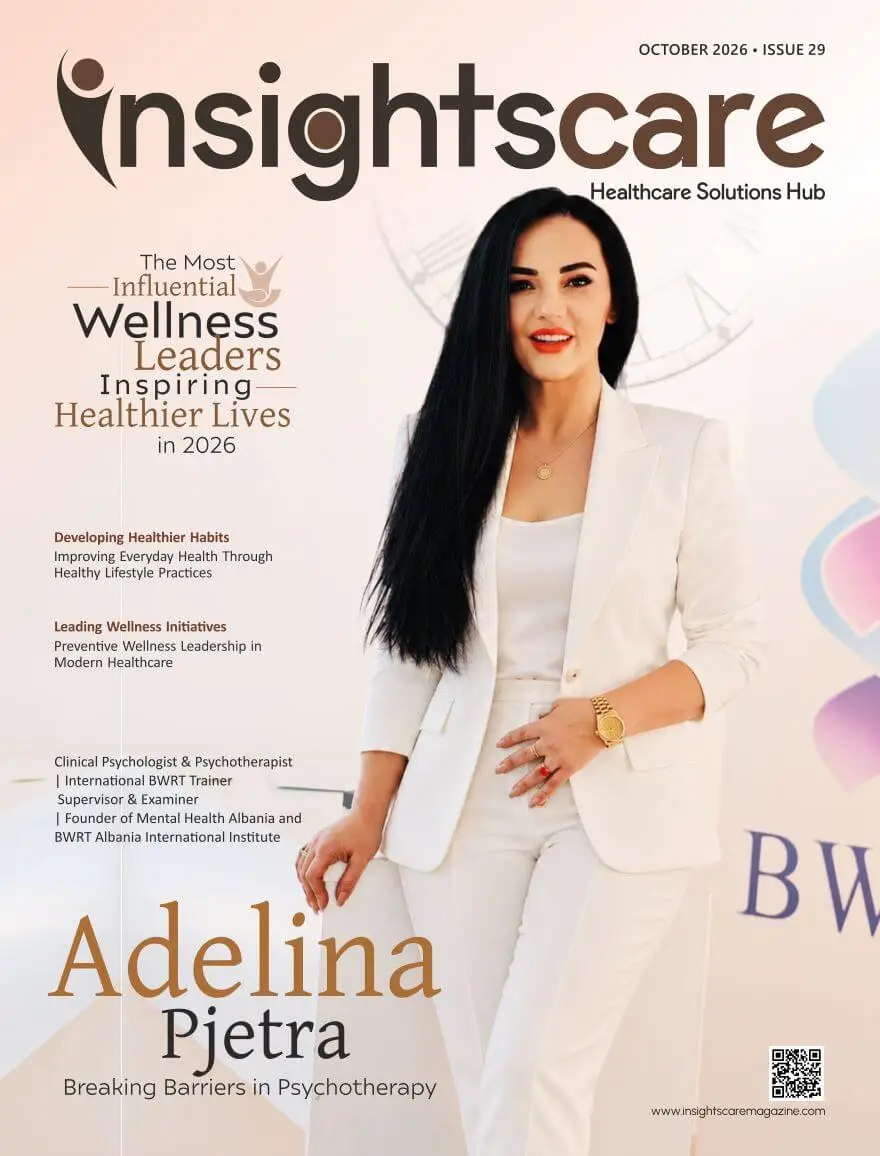
Adelina Pjetra has taken on that challenge. A Clinical Psychologist and Psychotherapist from Albania, she founded Mental Health Albania and serves as the Founder and CEO of BWRT Albania International Institute. She is also an internationally accredited BWRT Trainer, Supervisor and Examiner, roles that have extended her expertise beyond Albania’s borders.
What makes her journey stand out is not simply her list of qualifications, but the institutions she has built to support other professionals. Through her work, Albania is not only learning from global mental health standards; it is also contributing to the field and creating a stronger platform for its professionals on the international stage.
Let’s hear from Adelina as she reflects on her journey, the barriers she has overcome, and her vision for advancing psychotherapy and mental health education in Albania and beyond!
Your professional journey began in Albania and has now achieved international recognition. What were the defining moments that shaped this transformation?
My professional journey began with a strong conviction that mental health care should be ethical, evidence-based, and capable of creating genuine transformation. One defining moment was establishing Mental Health Albania and later BWRT Albania International Institute, initiatives created to provide high-quality clinical services while raising the standards of professional training and practice.
My advanced international training in psychotherapy, trauma, EMDR, and BWRT marked another turning point. Becoming an internationally accredited BWRT Trainer, Supervisor, and Examiner enabled me to bring contemporary therapeutic approaches to Albania while representing Albanian expertise internationally. Speaking at the BWRT World Congress in London was especially significant. It demonstrated that meaningful clinical work developed in Albania could contribute to the global conversation on psychotherapy.
This transformation did not happen through one opportunity alone. It was built through years of clinical responsibility, continuous education, and the courage to move beyond established boundaries. My journey reflects a simple belief: where you begin does not determine how far your work can reach.
What challenges did you face while building credibility in a field where professionals from smaller countries are often underrepresented internationally?
One of the greatest challenges was overcoming the assumption that professional excellence is defined by geography. Specialists from smaller countries are often required to demonstrate their competence repeatedly before being given the same visibility and trust as colleagues from more internationally established systems.
Building credibility demanded much more than qualifications alone. I had to maintain consistently high clinical standards, pursue continuous international education, work under supervision, and ensure that every aspect of my practice reflected ethics and accountability. There were also practical barriers: limited international visibility, fewer professional networks, and the challenge of introducing advanced therapeutic approaches within a system still developing its mental-health infrastructure.
I never wanted recognition simply because I came from Albania; I wanted my work to be recognised because it met international standards. Credibility was not given to me – it was built patiently through competence, integrity, and measurable impact.
Was there a particular achievement or international opportunity that made you realize your work had gained recognition beyond Albania?
Yes. A defining moment was being invited to speak at the ninth BWRT World Congress in London. Presenting my work on BWRT in Emergency Psychological Interventions before an international professional audience made me realise that the clinical knowledge I had developed in Albania was relevant far beyond our national borders.
What carried the greatest significance was being recognised as someone who could contribute knowledge and an original professional perspective to the wider psychotherapy community. I was no longer participating only as a learner; I was contributing as a specialist, educator, and representative of Albania. It confirmed something deeply important to me – that professional work created with excellence and integrity in a small country can earn its place within the global conversation.
How have your Albanian identity, values, and professional experiences influenced the way you work with international colleagues?
My Albanian identity has deeply shaped both who I am and how I work. Coming from a culture that places great importance on human connection, loyalty, perseverance, and responsibility has taught me to approach international collaboration with warmth, authenticity, and respect.
Clinically, my work has exposed me to the complex influence of family, migration, collective history, and cultural identity on psychological well-being. This has made me especially attentive to context; I do not assume that one cultural perspective applies universally. I see myself as a bridge: bringing international knowledge and standards to Albania while bringing Albanian experience, resilience, and professional contribution to the wider world.
You have challenged traditional limitations and opened new pathways for mental-health professionals. Which walls were the most difficult to break?
Some walls were geographical – the belief that professionals from smaller countries should remain followers of international developments rather than becoming educators and leaders themselves. Others were cultural: the stigma surrounding mental health and the expectation that emotional suffering should be hidden or endured in silence.
Within the profession, I also encountered resistance to innovation. Introducing a contemporary therapeutic approach such as BWRT meant challenging familiar ways of thinking and demonstrating that innovation must be accompanied by rigorous training and ethical responsibility. As an Albanian woman in leadership, I also had to move beyond expectations about how visible or authoritative a woman should be. At times, confidence was interpreted as confrontation. I learned not to reduce myself to make others more comfortable. My greatest satisfaction comes from seeing professionals I have trained become more confident and recognise that their origins do not determine the limits of their future.
What message would you give to Albanian women and emerging professionals who believe that international recognition is beyond their reach?
My message is simple: your place of origin does not determine the limits of your future. It means your path may require greater courage, preparation, and perseverance – but it remains entirely within your reach. Do not wait for someone else to give you permission to become visible. Invest deeply in your education, develop genuine competence, and allow the quality of your work to become your strongest introduction.
To Albanian women especially, I would say: never reduce your ambition to make other people comfortable. You may be told that you are too determined or too demanding. Enter these spaces prepared. Speak with knowledge. Lead with integrity. Do not confuse humility with silence. Break the wall – but leave a door open for those who come after you.
What is BWRT, and how did you first learn about it?
BWRT, or BrainWorking Recursive Therapy, is a modern, structured model of psychotherapy designed to work with the rapid, automatic processes that occur before conscious thought fully develops. These processes can influence how a person reacts to trauma, anxiety, panic, phobias, and other emotional difficulties.
What initially attracted me to BWRT was its focus on the pattern underlying the problem rather than requiring clients to repeatedly disclose or relive distressing experiences. The client remains conscious, aware, and in control throughout, while the therapist follows a carefully structured protocol. I first discovered BWRT while researching advanced international approaches that could complement my work in trauma. BWRT did not simply add another technique to my practice; it transformed how I understood and approached automatic psychological responses.
Why do you consider BWRT different, and why has it become your number-one choice among the modalities you have trained in?
BWRT is not my first choice because I disregard other methods, including EMDR and other trauma-focused approaches; it is my number-one choice because of what I have consistently observed in my clinical practice. What distinguishes BWRT is the level at which it is designed to intervene. Many psychological difficulties persist even when clients consciously understand their origins. BWRT focuses on the rapid, automatic response that can arise before conscious reasoning has the opportunity to intervene.
Its structure is another important difference. Clients remain conscious, aware, and in control throughout, and in many cases they do not need to disclose every detail of a traumatic experience. For me, professional expertise is not demonstrated by using one modality for everyone. It is demonstrated by knowing multiple approaches – and understanding why, when, and for whom each one should be used.
Looking ahead, what is your global vision for Adelina Pjetra, Mental Health Albania, and BWRT Albania International Institute?
My global vision is to create a lasting bridge between Albania and the international mental health community – one built on clinical excellence, ethical leadership, and meaningful human impact. For Mental Health Albania, I envision a respected centre of clinical excellence that also advances public education and reduces stigma. For BWRT Albania International Institute, my vision is to expand its position as a recognised centre for internationally aligned BWRT education, preparing practitioners who are technically skilled, ethically grounded, and confident in contributing to the global professional community.
In the future, I see Albania becoming an increasingly visible hub for advanced psychotherapy education and cross-border collaboration. Ultimately, my ambition is not simply to build successful institutions. It is to create a professional legacy: stronger standards, better-trained clinicians, and new pathways for those who follow. The vision is global, but its foundation remains clear: excellence in mind, integrity in practice, and transformation in life.
What responsibility comes with representing Albania on international platforms in psychotherapy and mental-health education?
Representing Albania on international platforms is both a profound honour and a serious responsibility. When I speak, teach, or supervise abroad, I am not representing only my individual work; I am also influencing how Albanian psychology and mental-health education are perceived internationally. That responsibility requires me to maintain the highest standards of clinical competence, ethics, and professional integrity in every interaction.
There is also a responsibility to those who will follow. International visibility should never end with personal recognition. It must help create connections and clearer pathways for other Albanian professionals, particularly younger psychologists who may not yet believe their work can reach beyond national borders.
What leadership principles guide the way you work with your team, partners, and the wider mental-health community?
My leadership is guided by integrity, competence, accountability, and respect. I believe expectations should be clear, decisions should be transparent, and responsibility should increase with authority. With teams and partners, I value open communication and genuine listening, because leadership should help others develop confidence and independent judgment rather than create dependence on the leader.
In every collaboration, roles, boundaries, and professional credit should be respected. Client welfare, confidentiality, and ethical care must remain more important than publicity or institutional ambition. I also believe leaders must model what they expect from others: continued education, supervision, humility, and the willingness to seek consultation when something falls outside their competence.