They lived through wars, endured poverty, and created hospitals and clinics out of nothing. Women leaders in the Arab world today are changing healthcare one life, one patient, one empowered woman at a time. They are redefining not only how healthcare is practiced, but also how women are perceived, listened, and treated in a society that frequently disregards them.
Standing out among these leaders is a physician who has turned a life of struggle into a life of purpose. Having survived war, financial challenges and the difficulties of raising children as a single mother, she built a clinic from the ground up and leads with empathy and care.
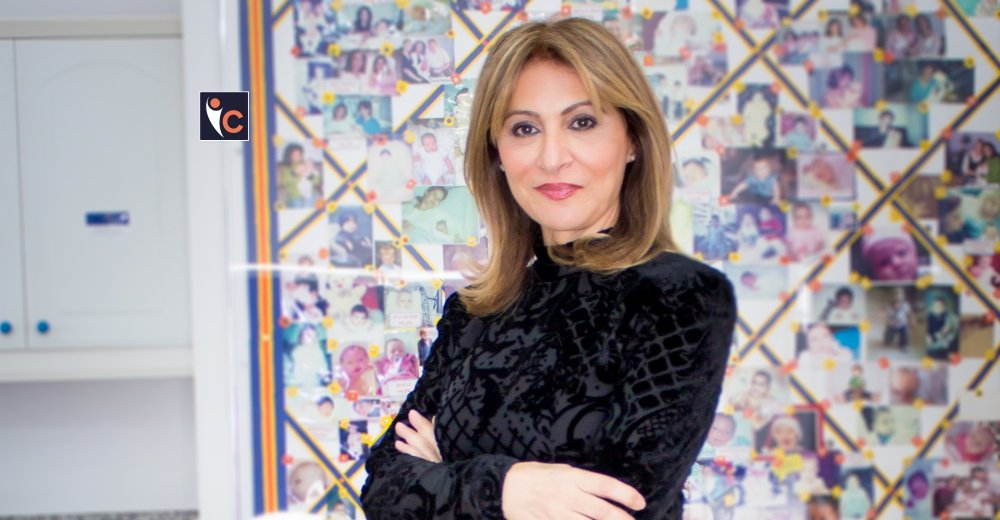
One of such rare people, who practices her values in her everyday life, is Dr. Leila Soudah, the CEO of DLS Clinic. Her clinic is a light to women’s healthcare, an integration of the latest treatment with tenderness, confidence and respect. However, outside of the clinic, her voice comes with a purpose to empower women, to break the bias in medicine, and to demonstrate that real leadership is not about dominance, but humility.
Let’s see how Dr. Leila Soudah turns personal struggle into a mission to empower women and improve healthcare!
Built from the Ground Up
For Dr. Leila Soudah, the path to leadership began not in boardrooms or medical schools but in the crucible of survival. “I started working in Germany at 18 to be able to eat, to pay my union fees, and to afford a small room to live in. I had zero financial support,” she recalls. She had left Jordan, escaping war, after living through two conflicts as a child. Out of this turbulence, she forged resilience.
From those early years, she adopted a mantra that continues to define her leadership: “girl, you can do the hell out of this. You can do it. There is nothing for me called impossible.” This spirit became the way she motivated not just herself but also her patients. As she puts it, “You got cancer? You can do it, girl. You got something wrong? You can do it, girl.”
To her, leadership is not about hierarchy but empowerment. “My first job is empowering people. Empowering women, women in first place, because in my opinion, women is not half of the society, they are the society. Without women, there is no uterus, there is no pregnancy. So this made my practice very much woman-oriented, humanity-oriented.”
She lives this belief in daily interactions with her staff. One of her most telling stories is that of her former cleaning lady. Recognizing her potential, Dr. Leila Soudah encouraged her growth until she became her right hand in the clinic. “Her salary went up, jumped like into the sky. Her quality of life is better. She got recently a baby and she can support her baby. This is the leadership.”
For her, the role of a boss is never to abuse authority. Instead, she ensures her employees are not overworked and that respect is paramount. As she puts it: “Leadership is humanity. Leadership is not, I am the president of a country and I use my power and my money to kill another country. Humanity. Baby, children. This is leadership. The other one is bad leadership. It’s a psychopath leadership.”
A Mother’s Journey
Raising her children as a single mother while building her clinic profoundly shaped her as a physician. “As a single mom, this increased my respect to women. This lets me be more transparent and more sensitive with her because she might go through what I went through. She might come one day and be single.”
This empathy translates directly into her care. She spends time preparing women for motherhood in ways few others do. Many of her patients admit that no one had prepared them for the realities of motherhood, and Dr. Leila Soudah considers it part of her mission to fill that gap—not only for patients but also for her own daughters and young women she encounters.
Her philosophy extends to teaching other doctors. When lecturing to gynecologists, she emphasizes empathy: “deal with your woman as she is your baby and you have to take care of her, teach her, lead her, let her be strong to go through the birth.”
She does not shy away from controversial views, including her belief that men should not practice gynecology. “When you tell the patient, push, you need to know what it means to push a baby out of your private parts. It will put your soul out of your heart. It’s not that joke.” This conviction is not about exclusion but about lived empathy; the belief that women deserve care from those who can truly understand their experience.
Her advocacy for women extends far beyond the clinic. She has stood with patients in court, even canceling flights and closing her clinic to testify on their behalf in custody battles and divorce cases. In one case, she swore on the Quran to provide testimony defending a woman who had endured infertility treatments and more than 300 injections before conceiving, only to suffer brutal abuse from her husband. “He broke her hips with his leg,” she recalls, her voice weighted with the memory. She told the judge: this was not a bad mother or wife, but a woman who had fought tirelessly to become one.
Empathy from Childhood Struggles
Much of Dr. Leila Soudah’s compassion is rooted in her own childhood trauma. As a child of three, she remembers eating stones because she was so hungry. Her mother found her on the roof of their home, picking small stones from the wall and swallowing them. Years later, a therapist explained that her body was craving calcium.
This haunting story shaped her empathy. “I ate stones. I was three years old because I collected, my body was telling me calcium. Can you imagine the body tell the brain and the person walk and do the job?” It is why she sees so quickly when young patients present with eating disorders or unusual behaviors, her mind instantly connects the dots to possible trauma, abuse, or neglect.
Her hardships did not end in childhood. She has endured three back surgeries, yet even in recovery she turned difficulty into opportunity. “In between I did a new diploma. I said I am sitting at home, I need to be busy. So I started studying again all about hormone, bioidentical hormone peptide and had a new diploma with great distinction.”
Her message to her staff reflects this philosophy. Yes, she may raise her voice at times, but she balances it with care, offering ultrasounds for employees’ pregnancies or leaving space for them to speak openly. She leads with respect, humility, and dialogue.
The Bias in Medicine
Medicine, in her view, remains deeply unfair to women. “Clarified she meant medicine is biased, not beast.” While men have had testosterone therapies for over a century, women’s hormonal therapies remain underdeveloped. Women carry the burden of 25–30 contraceptive options, while men have only condoms.
Too often, women’s concerns are dismissed. Menopause is brushed aside as “normal,” while men’s issues are addressed quickly and effectively. She pushes against this bias in her practice, particularly in areas of sexuality, fertility, and menopause. Her work restores health, dignity, and even marriages.
She strongly criticizes the rise of cosmetic gynecological procedures marketed to women. The so-called “Barbie vagina,” she argues, is sexist and profit-driven. Her guidance is clear: women should undergo procedures only for themselves, never for the satisfaction of others.
Redefining Transformation
In 2025, “transformative leadership” has become a very common phrase. Yet, Dr. Leila Soudah insists, real transformation is rare. She rejects the trend of superficial transformations like cosmetic surgeries that exploit rather than empower women.
True transformation, she believes, comes from empowerment, dignity, and justice. She denounces the branding of doctors as “vagina doctors” and stands firmly for corrective surgeries only when medically necessary, not as fashion trends.
Creating a Healing Space
Her clinic reflects her philosophy in both spirit and design. Recently, she transformed it into a more feminine, warm, and home-like environment, one where patients and staff feel safe, calm, and valued.
She has integrated advanced therapies such as ozone therapy, oxygen therapy, and red/infrared light therapy. These innovations support not just recovery but long-term health and well-being, aligning with her preventive approach to medicine.
Looking ahead, she aims to expand her teaching globally, with lectures already delivered in Bucharest, Cairo, and Qatar. Her focus is on bioidentical hormones, regenerative medicine, and preventive healthcare. Her vision: reducing dependency on hospitals by addressing chronic diseases before they begin.
A Mission Beyond Medicine
Her mission reaches far beyond the clinic. She wants to “change the world” in how it views women, children, and humanity. Her anti-war stance is clear, particularly regarding the Palestinian experience of occupation. She advocates for compassion not only toward people but also toward animals, reflecting her universal sense of empathy.
Leadership, for her, is instinctive, like when she saved a woman from a seizure on a flight. Compassionate leadership is also reflected in how she delivers babies, emphasizing gentle, skin-to-skin care.
Her broader mission is also captured in her writing. She is working on several books: her biography, a work on child and women abuse, a book on independence for women, her personal journey with breast cancer, and research on reverse aging and preventive medicine. Each project extends her vision of empowerment and healing to a global audience.
Looking Ahead
The next five years for DLS Clinic and women’s healthcare in the region will see expansion in therapies, teaching, and global advocacy. More importantly, they will reflect Dr. Leila Soudah’s unwavering belief that healthcare should be about prevention, empowerment, and humanity.
Her story is not just about medicine but about leadership in its truest form: leadership as humility, respect, and empowerment. As she continues to share her vision with the world, she closes with the same warmth she offers her patients; expressing love and respect for those who help her carry her message forward.
In an age when transformation is often equated with trendiness, Dr. Leila Soudah reminds us that true transformation is deeply human. It is about resilience, empowerment, and building a better future for women, children, and society as a whole.