Clinical research is becoming increasingly important in shaping equitable healthcare outcomes, yet large parts of the world are still left out of the studies that drive medical progress. As global health priorities evolve, more people are realizing that better research systems are key to tackling local health problems and getting new treatments to those who need them.
Across Africa, work to build research capacity is growing fast. A new wave of leaders is strengthening scientific foundations, encouraging teamwork and opening doors for local experts to grow. Their work is helping to reshape how and where global health research takes place.
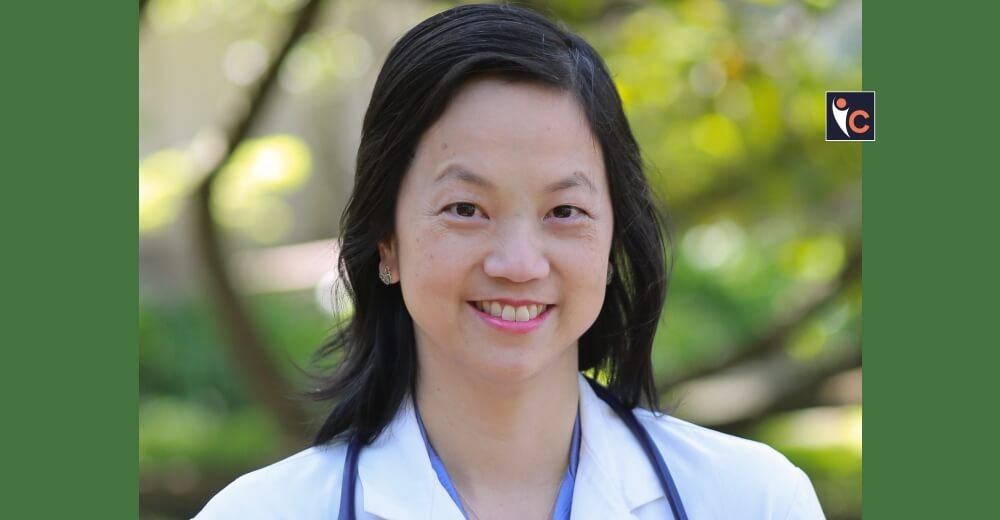
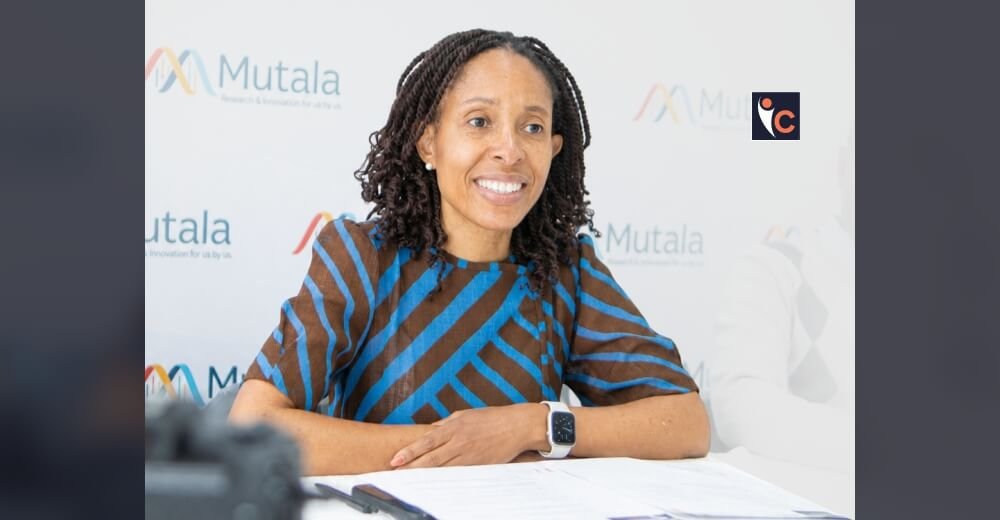
Among these leaders is Dr. Tariro Makadzange, MD, DPhil, Founder and CEO of the Africa Clinical Research Network (ACRN). Drawing on a career that spans clinical medicine, scientific research and international collaboration, she has focused on advancing Africa’s role in global clinical research while championing the development of local talent and leadership.
Under her guidance, ACRN is building a connected research ecosystem designed to support high-quality studies and long-term scientific growth across the continent. Through a growing network of clinical research sites across Africa, supported by modern digital infrastructure and standardized operating systems, ACRN is working to make high-quality multi-country clinical trials more accessible, efficient, and globally competitive. The organization combines local leadership, operational rigor, and long-term capacity development to strengthen Africa’s role in global clinical research. Her perspective reflects both a deep understanding of healthcare challenges and a commitment to creating sustainable solutions through research.
Let’s delve into the interview details below!
Could you share the key moments in your professional journey that shaped your path to becoming a leader in global healthcare?
My path began at Smith College, where women-in-science summer research programmes first introduced me to the laboratory bench. Those summers alternating between Massachusetts and trips home to Zimbabwe opened a door I never closed. I still remember the first time I saw a malaria parasite under a slide; that single image sent me looking for a lab, and I found a researcher at the University of Massachusetts, Amherst, studying African trypanosomiasis. Smith mentors encouraged me to stretch my ambition, and I went on to medical school at the height of Africa’s HIV epidemic, determined to be part of solving it. Harvard professors who were both clinicians and scientists modelled the dual path I wanted, leading me into an MD–PhD with my doctorate at Oxford and research time in Japan, where I saw what real West–East collaboration looks like.
As CEO of ACRN, how do you define your core responsibilities, and what priorities currently guide your leadership?
At ACRN, my core responsibility is to build a pan-African clinical research ecosystem that can deliver globally competitive trials and to make sure the people, partnerships, systems and governance behind that ecosystem hold up under scrutiny. Day to day, that runs from advancing our Gates Foundation-supported studies and programs and Oracle digital infrastructure build, to onboarding sites across our initial 35-site network, stewarding budgets, mentoring our team and making sure regulators, sponsors and communities all see the same ACRN. My priorities right now are quality, capacity and capital. Today, Africa hosts only a small fraction of global clinical trials despite carrying a significant share of the global disease burden. Expanding that participation will require sustained investment in quality systems, workforce development, and research infrastructure.
How would you describe your leadership philosophy, and how has it evolved while navigating the global healthcare landscape?
My leadership philosophy centres on young people. I want to find them early, train them rigorously, mentor them generously, and then watch them grow and thrive because the African scientific workforce we will need in 2040 is being shaped right now. Over time, that conviction has only hardened: real leadership in global health is not about my own résumé, it is about how many credible African investigators, regulators, statisticians and clinicians I can help put on the map. Authority transferred is authority multiplied.
What are some of the most significant challenges you have encountered in advancing clinical research across Africa, and how have these experiences influenced your approach?
The hardest challenges are not technical; they are belief and capital. Too many partners still doubt that Africa can lead in science, and too few governments, entrepreneurs and philanthropists on the continent treat research as core infrastructure. No country develops without building its own science, biological, physical, computational and beyond. Resource constraints have made us inventive: we design lean, we partner deeply, and we insist on African investigators leading African studies. Each constraint has sharpened ACRN’s model and pushed me to ask, every quarter, whether we are still answering the unmet medical needs of our communities.
In a rapidly evolving environment, how do you ensure that ACRN stays ahead in terms of innovation, quality, and global collaboration?
We stay ahead by combining a growing pan-African clinical research site network with modern digital infrastructure and globally recognised quality systems. Through ACRN’s expanding network, we are building the operational foundation required to support high-quality multi-country clinical trials across Africa. The future of clinical trials on the continent must be African-led, digitally enabled, cost-effective, and designed around the questions our communities need answered. Through collaborations with Oracle Health, the Gates Medical Research Institute (Gates MRI), the Ellison Institute of Technology, Oxford (EIT), and our Gates Foundation-supported programmes, we are deploying modern digital clinical trial infrastructure across the network, including site selection tools, electronic data capture, randomisation systems and AI-enabled analytics. These investments are helping strengthen research quality, operational efficiency and long-term capacity across participating sites. Quality is non-negotiable. We hold our sites to globally recognised standards and treat every protocol as evidence the world will read. Innovation, for us, is operational discipline plus the willingness to redesign what is no longer fit for purpose.
Your work has earned recognition across the healthcare sector. What do these awards and achievements represent to you personally and professionally?
Awards matter when they tell a bigger story. Being named to the TIME100 Health 2026 list is meaningful to me personally, but professionally, it is far more important that the recognition lands on Africa. It says this work, building local research leadership, is a critical journey the continent must take. And it is a journey we can only take with partners: partners who see the opportunity and the market, partners who want to contribute to solving real problems on the continent, and partners willing to engage Africa as an equal in global science and technology. Recognition is most useful when it opens those doors.
Leading a high-impact organisation can be demanding. How do you maintain balance between your professional responsibilities and personal well-being?
I am not sure there really is a balance, and I am not chasing one. When you love what you do, you stop experiencing it as a burden. People talk about work–life balance most often when work feels heavy; I take pleasure in mine. For me, it is closer to hanging out, playing, and solving problems with people I respect and that energy carries through to family, friends and everything outside work that matters to me.
Looking ahead, what are your long-term goals, and what advice would you offer to aspiring women leaders aiming to make a mark in global healthcare?
My long-term goal is to disrupt clinical research in Africa to embed innovation, dismantle the structural barriers that keep important trials offshore, and reshape global research design so that the West no longer needs to import its own studies onto our continent on its own terms. To young women aiming for global healthcare leadership: choose problems that genuinely matter to you, ask for the mentorship you need, and do not wait for permission to lead. Build technical depth, surround yourself with people who stretch your ambition, and stay close enough to the communities you serve that the science you do is worth doing.