
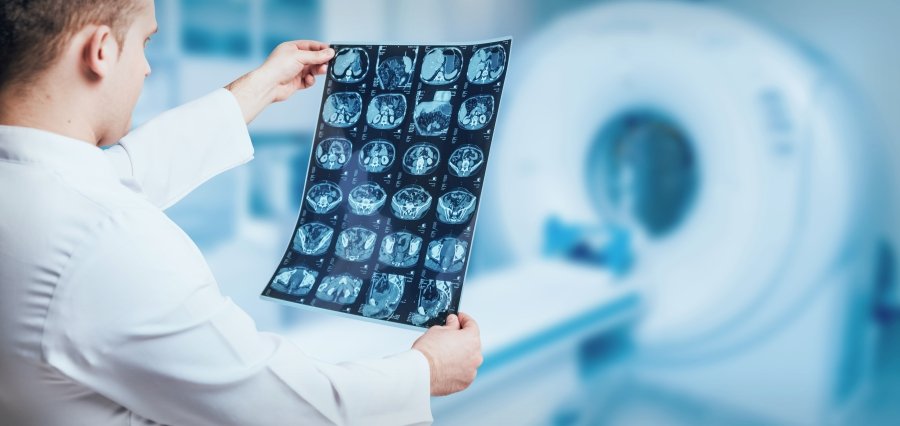
Prime Highlights
- Scientists at the University of Michigan have developed an AI model, Prima, that can diagnose brain MRI scans within seconds with up to 97.5% accuracy.
- The system analyzes imaging data alongside patient medical histories to identify over 50 neurological conditions, helping speed up diagnosis and ease pressure on healthcare systems.
Key Facts
- Prima was trained on more than 220,000 MRI studiesand later tested on 29,431 MRI scans during a year-long health system study.
- The model can detect conditions including strokes, brain tumors, and haemorrhages, and was detailed in a study published in Nature Biomedical Engineering.
Background
Scientists at the University of Michigan have developed an artificial intelligence model that can diagnose brain MRI scans within seconds with an accuracy rate of up to 97.5%, according to a study published in Nature Biomedical Engineering.
The model, called Prima, can identify more than 50 neurological conditions, including strokes, brain tumors and haemorrhages. Researchers trained the system on more than 220,000 MRI studies along with patient medical histories. They later tested it across 29,431 MRI scans in a year-long health system study.
Lead author Dr. Todd Hollon, a neurosurgeon at U-M Health, said Prima works like “ChatGPT for medical imaging.” He explained that the tool combines imaging data with patient history to deliver fast and accurate results. He added that the system could reduce pressure on hospitals and help areas where specialist doctors are not easily available.
Co-first author Samir Harake said the AI functions much like a radiologist. It studies patterns in scans and medical records to form a clear diagnosis. Researchers believe the technology could improve workflow and speed up treatment decisions.
The study comes as AI tools gain wider attention in medical diagnosis. Recently, entrepreneur Elon Musk said AI systems can assist in reading scans and sometimes detect issues missed by doctors. He gave an example where an AI tool spotted appendicitis after a first misdiagnosis, which led to timely surgery.
Researchers say Prima helps doctors by giving quick and reliable insights, not replacing them.