The history of oncology is, in many ways, a history of narrowing. The more science advanced, the more precisely it could target the disease, and the more the field’s attention converged on the tumor itself. Biology became clearer. The treatments were becoming sharper. And the person carrying the diagnosis was, in some clinics, becoming secondary to the pathology they carried.
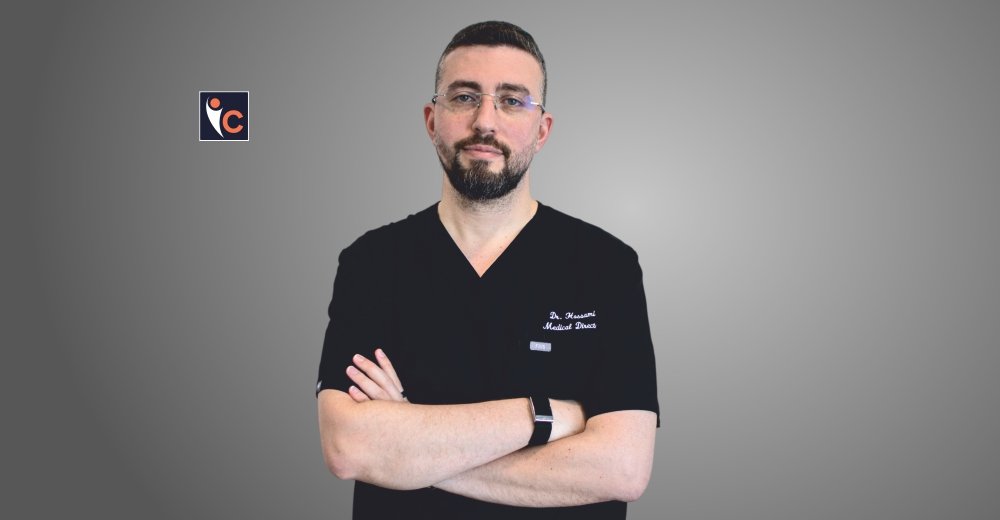
Dr. Abdulla El Hossami noticed that gap early. And he has spent his career as Chief Medical Officer at Verita Healthcare, a multi-regional healthcare organization operating across Southeast Asia, the Middle East, and Central America, systematically building the frameworks that are close to it. His work sits at the intersection of integrative oncology, precision medicine, and patient-centered care, disciplines that in his hands are not competing philosophies but complementary dimensions of a single, coherent approach to what cancer treatment can and should deliver.
Verita Healthcare, established in 2013, was built around the conviction that world-class oncology and genuine humanization of the patient experience are not trade-offs but preconditions for each other. Dr. Hossami’s leadership as CMO gives that conviction of its clinical architecture.
He mentions, “True innovation in healthcare must improve outcomes, not just sophistication. Despite technological advancement, it will bridge disciplines, personalize medicine, humanize care and be scalable and accessible across Asia.”
Integrative Oncology: A Broader Clinical Question
For Dr. Hossami, integrative oncology begins not with a list of therapies but with a different clinical question: how can we improve outcomes while also improving the patient’s overall health, strength, and quality of life throughout the cancer journey? That question leads to a significantly broader scope of intervention than conventional oncology typically encompasses.
His clinical approach incorporates adoptive cell transfer therapy including Tumor-Infiltrating Lymphocytes, NK Cells, and Dendritic cells, immune support, metabolic health optimization, thermal oncology, nutrition, rehabilitation, psychological care, and personalized supportive protocols. Each is evaluated through a lens of scientific rigor and patient safety, chosen because the evidence supports its role in an integrated treatment ecosystem.
The scientific basis for this breadth is growing. Modern oncology increasingly recognizes that cancer is systemic rather than local, that the tumor microenvironment, inflammation, metabolism, immune regulation, microbiome interactions, stress physiology, and lifestyle factors all influence treatment response and long-term outcomes. That recognition naturally supports a more multidimensional treatment philosophy, and it is precisely the philosophy Dr. Hossami has built Verita Healthcare’s clinical model around.
He asserts, “Patients are looking not only for survival, but also for hope, functionality, purpose, and quality of life. A patient-centered integrative approach allows us to address those needs while maintaining medical rigor and ethical responsibility.”
A Milestone That Shifted the Culture of Care
The most meaningful milestones in a clinical leader’s career are rarely the ones that appear in a publication. They are the ones that change how an organization thinks about what it is doing and why.
For Dr. Hossami, that milestone was the development of a genuinely integrative, patient-centered oncology model at Verita Healthcare, combining evidence-based conventional cancer treatment with comprehensive supportive care strategies across oncology, nutritional support, rehabilitation, psychological care, hyperthermia, immune-focused therapies, and personalized supportive protocols.
The outcomes extended well beyond clinical metrics. Patients became more engaged in their treatment plans, better informed about their options, and more empowered in the decisions shaping their care. Communication between healthcare teams and patients strengthened measurably. The culture shifted decisively from being purely disease-focused to being genuinely patient-focused, achieved not through a policy directive but through the systematic redesign of how care was delivered at every touchpoint.
He highlights, “From a leadership perspective, this reinforced my belief that innovation in healthcare is not only about introducing advanced technologies, but about creating systems of care that address the full human experience behind every diagnosis.”
Building the Frameworks That Enable Innovation
At Verita Healthcare, the infrastructure for clinical innovation begins with an international advisory board spanning oncology, microbiology, neurology, and immunology. This structure reflects a foundational conviction: no single discipline or institution can advance patient care in isolation.
His approach to incorporating advanced technologies is disciplined and purposeful. AI-supported diagnostics, genomic profiling, molecular testing, digital health platforms, and precision imaging are deployed not as tools of sophistication but as instruments of personalization, enabling identification of tumor biology, treatment resistance mechanisms, immune characteristics, and patient-specific risk factors that guide genuinely individualized care.
But technology, in his framework, is always subordinate to clinical judgment and human connection. The teams he builds span oncology, immunology, metabolic medicine, rehabilitation, nutrition, psychology, and supportive care, working together to create integrated frameworks that address both the disease and the patient as a whole.
He states, “Technology alone is not enough. Clinical expertise and multidisciplinary collaboration remain essential for translating scientific advancements into safe, practical, and patient-centered treatment models.”
Managing the Tension Between Innovation and Trust
One of the most honest dimensions of Dr. Hossami’s leadership is his candor about the tensions that define it. The rapid pace of medical innovation, regulatory standards designed to protect patient safety, and the preservation of patient trust do not always move in the same direction.
In fields such as oncology, regenerative medicine, and integrative healthcare, many promising therapies evolve faster than regulatory frameworks can accommodate, creating a space where clinical judgment and ethical responsibility must compensate for the absence of definitive regulatory guidance. His approach in that space is grounded in scientific rationale, patient safety, and transparency above all else.
The challenge is compounded by the information environment that patients now navigate. Exposed to experimental therapies, conflicting health claims, and sometimes commercially motivated health content, patients can arrive with expectations that require careful and honest management. Dr. Hossami’s response is education rather than dismissal, transparent communication about both the potential and the limitations of every treatment option, and a consistent emphasis on the evidence base that underlies every clinical recommendation.
He reflects, “Patient trust remains the foundation of healthcare. Even the most advanced technologies have limited value if patients do not feel safe, informed, respected, and genuinely cared for throughout their medical journey.”
Asia at the Center of Healthcare’s Future
Dr. Hossami’s perspective on Asia’s role in the global healthcare transformation is both geographically specific and analytically precise. Asia is not simply a growing market for established healthcare models. It is, in his view, increasingly a generator of the models themselves.
The region combines world-class technological advancement with diverse medical philosophies, large patient populations, and growing demand for personalized healthcare solutions. The trends he identifies as most critical moving toward 2026 and beyond reflect this positioning: the convergence of AI-supported diagnostics and predictive analytics with precision medicine and preventive healthcare, the expansion of hybrid and decentralized care models through telemedicine and remote monitoring, and the growing strategic importance of metabolic health, wearable technologies, and continuous health monitoring.
Alongside these, he is equally clear about what must not be sacrificed in the pursuit of innovation: regulatory governance, ethical AI implementation, data security, and the preservation of the human dimension of care that defines genuinely excellent medicine.
He envisions, “The future of healthcare in Asia will be defined by systems that are technologically advanced yet deeply human-centered, combining scientific innovation with accessibility, personalization, prevention, and compassionate care.”
Building Teams That Reflect the Vision
The culture Dr. Hossami builds within Verita Healthcare’s multidisciplinary teams reflects the same integration of rigor and humanity that characterizes his clinical philosophy. Excellence, in his framework, is not a standard imposed from above but a shared orientation that emerges when healthcare professionals feel valued, supported, and genuinely connected to the impact of their work on patients’ lives.
Open communication across specialties, accountability without hierarchy limiting collaboration, continuous learning through clinical case reviews and international conferences, and a consistent emphasis on empathy and purpose are the conditions he creates and maintains deliberately. Some of the most important clinical insights, he observes, emerge not from individual expertise but from multidisciplinary discussions where different perspectives converge around a patient-centered decision.
He affirms, “My goal is to build teams that combine clinical excellence with compassion, collaboration, and a shared commitment to improving patient outcomes and experiences.”
A Vision Built for the Long Term
Dr. Hossami’s long-term vision for healthcare is defined not by a specific technology or therapeutic advance but by a shift in what medicine is fundamentally oriented toward: from treating disease alone to optimizing overall human health, resilience, longevity, and quality of life.
In oncology specifically, he sees the future in integrated care models that combine precision medicine, immunotherapy, genomics, AI-driven diagnostics, regenerative medicine, and evidence-based supportive therapies into highly individualized treatment strategies. Alongside these advances, healthcare systems must become more accessible, digitally connected, and prevention-focused to address the growing burden of chronic disease across diverse populations.
To emerging medical leaders, his counsel is direct and grounded: remain scientifically rigorous and deeply human-centered. Let ethics, evidence, and patient wellbeing guide every innovation decision. Think beyond traditional disciplinary boundaries. Embrace collaboration between technology, research, and holistic patient care.
He reminds, “Patients may remember advanced treatments, but they will always remember how they were treated, supported, and understood during some of the most difficult moments of their lives.”
Dr. Abdulla El Hossami is not simply managing a clinical organization. He is building, one integrated framework and one patient encounter at a time, the proof that the future of cancer care belongs not to those who narrowed their focus most precisely but to those who expanded it most thoughtfully.