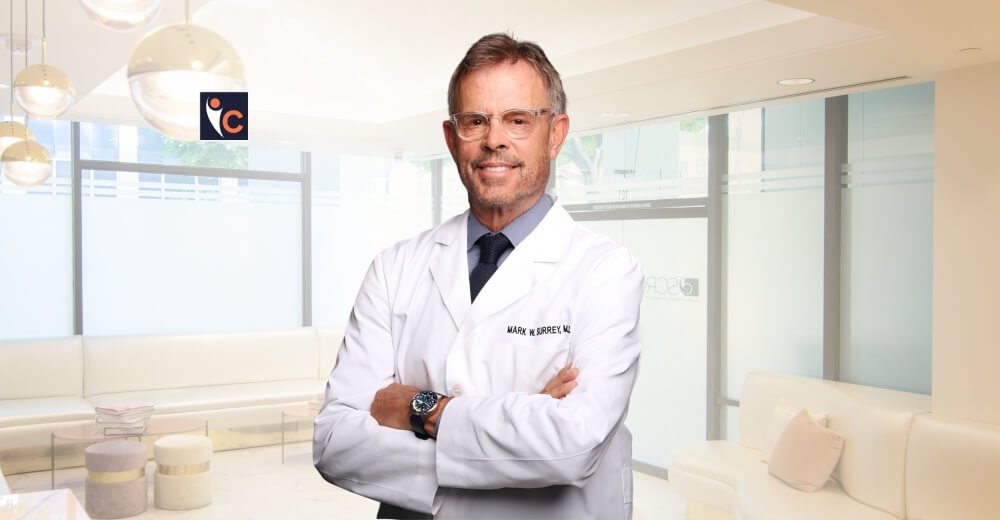
Only a handful of professionals have truly transformed reproductive medicine from its early experimental phase to its current advanced state. The field of fertility treatment has greatly benefited from Dr. Mark Surrey, who dedicated his career to developing advanced treatment methods that improved patient outcomes.
Building on this legacy, he continues to shape the field through his leadership at Southern California Reproductive Center, where he serves as Co-founder and Medical Director. In this role, he drives the development of advanced medical technologies and champions a personalized approach, ensuring every patient receives tailored and effective fertility care.
To learn more about his journey, insights, and contributions to modern fertility care, stay connected and follow for more inspiring stories from leaders shaping the future of healthcare.
From Surgery to Life Creation: An Unexpected Journey
Dr. Surrey’s path into reproductive endocrinology began in an unlikely place, the oncology operating room. After completing his residency, he pursued specialty training in London, strategically positioning himself near Cambridge, England, where in vitro fertilization first emerged as an innovative concept. The timing proved pivotal.
“I began my career doing oncology surgery and found this to be much more rewarding in regard to the patient outcomes,” he reflects. This candid admission reveals the driving force behind his career shift: the profound satisfaction of creating life rather than simply fighting disease.
During those early years in England, Dr. Surrey and his colleagues pioneered the use of endoscopic microsurgical procedures to perform fertility treatments. Technology was nascent, the success rates modest, but the potential unmistakable. What he witnessed then was just the beginning of a revolution that would fundamentally reshape how society approaches family planning.
Witnessing a Remarkable Transformation
The evolution Dr. Surrey has observed throughout his career reads like a scientific fairy tale. When IVF first entered clinical practice, it represented a last resort, something physicians attempted only after exhausting all other options. At the time, fertility treatments were still developing, and procedures often required more invasive surgical interventions.
“It used to involve a surgical procedure called laparoscopy, and it’s now performed by ultrasound with minimal intravenous sedation,” he explains. This shift alone transformed the patient’s experience from a major surgery to an outpatient procedure.
But the real transformation lies in the effectiveness of modern fertility care. According to data and trends reported by organizations such as the CDC and SART, advancements in embryo selection, laboratory technology, genetic testing, and personalized treatment approaches have significantly improved IVF outcomes over the years. IVF has evolved from being considered a last-resort treatment into one of the most widely trusted and effective fertility solutions available today.
“It’s been a remarkable transformation in the effectiveness of this technology, and that has been accompanied by a significant difference in the ease with which patients can go through it,” he notes. The combination of improved outcomes and reduced patient burden represents the ideal trajectory for any medical advancement.
Single Embryo Transfers: Quality Over Quantity
Dr. Surrey highlights the ability to examine embryos for both physical structure and genetic health before transfer as one of the most important developments in the field. This capability enables physicians to improve pregnancy outcomes while transferring only a single embryo, a practice that significantly reduces the risks associated with multiple pregnancies.
“With a single embryo transfer, we can look at the structural integrity of the embryo as well as its genetic content, which enables us to achieve very high rates of successful pregnancies,” he explains. This precision marks a major departure from earlier practices when multiple embryo transfers were more commonly used because treatment outcomes were far less predictable.
The technology behind this precision deserves special attention. His center has embraced Embryoscope, a sophisticated system that monitors embryo development continuously. This technology captures the division of cells in real-time, creating a retrospective timeline that embryologists can analyze to distinguish normal from abnormal development patterns.
During the interview, he enthusiastically demonstrated this technology, showing how embryologists can observe a four-cell embryo dividing, monitor its progression through development, and track its advancement to the blastocyst stage. This same stage allows for trophectoderm cell collection for genetic analysis, providing comprehensive information before any transfer occurs.
“The side effect that this technology has enabled us to produce is a higher rate of embryo formation that’s normal and takes people with very low ovarian reserve and enables them to have the best outcomes from their embryo formation,” he explains. For patients with diminished fertility potential, this advancement represents hope where little existed before.
Preserving Fertility, Expanding Possibilities
One factor remains stubbornly resistant to technological advancement: the effect of aging on ovarian function and reserve. Dr. Surrey acknowledges this biological reality but emphasizes that modern medicine now offers a powerful countermeasure, fertility preservation.
The Southern California Reproductive Center preserves both unfertilized gametes (eggs or sperm) and fertilized embryos, which can undergo genetic testing before cryopreservation. These materials remain viable for many years, enabling individuals to essentially freeze their fertility at an optimal age.
“It’s possible to take somebody who is in their early thirties when their fertility is much higher and preserve their fertility at this stage until they’re in their forties,” he explains. That decade carries enormous social significance.
He recognizes that many people in their twenties and early thirties aren’t ready to make long-term partnership commitments, yet that same period represents their peak fertility years. Fertility preservation resolves this timing mismatch, providing what he calls “an insurance plan for their future.”
This capability didn’t exist two decades ago. Its emergence has fundamentally altered how people approach life planning, enabling them to pursue education, careers, and personal growth without sacrificing their future reproductive options. “The technology has enabled us to transform the way that people live their lives,” he remarks.
Building Excellence: The Southern California Reproductive Center
Dr. Surrey co-founded the Southern California Reproductive Center 26 years ago with a clear vision of assembling the best equipment, technologies, scientists, and embryologists available. The center’s laboratory has become so highly regarded that major medical institutions, including UCLA and Cedars-Sinai, use its services.
“They use our laboratory because it is one of the best laboratories in the country,” he shares. The evidence supporting this claim extends beyond partnerships with prestigious institutions. Daily research activities keep the center at the forefront of reproductive technology.
Leading this scientific excellence is Dr. Kathy Wiemer, the center’s laboratory director and a world-renowned embryologist. Dr. Wiemer holds a PhD and directs a team that includes other PhD-level embryologists working both locally and internationally. Their collective experience and ongoing research ensure patients benefit from the most current scientific knowledge.
The center also fulfills an educational mission, training physicians and fellows from Los Angeles’s two major medical centers. This teaching role benefits everyone involved to gain exposure to cutting-edge technology and techniques, while the center’s staff benefits from the fresh perspectives and questions these trainees bring.
What distinguishes the Southern California Reproductive Center further is its comprehensive approach. Unlike facilities that focus solely on IVF procedures, the center offers endoscopic procedures to support patients throughout their fertility journeys. Physicians, technologists, radiologists, and embryologists all work under one roof, providing seamless, coordinated care.
“We have a lot of people here who are all at the top of their field that help us provide the best services for patients,” he emphasizes. This concentration of expertise creates an environment where complex cases receive truly comprehensive attention.
Education as Emotional Support
For all the technological sophistication Dr. Surrey champions, he grounds his practice philosophy in something decidedly human: patient education. When asked how he ensures patients feel supported emotionally throughout treatment, he immediately points to knowledge as the antidote to anxiety.
“As human beings, we all feel more comfortable and less stressed and less anxious when we are informed,” he explains. The center provides each patient with detailed information about their specific situation, both physical and emotional, creating a knowledge base that reduces fear and uncertainty.
He believes that adequate information and education are the first steps to alleviating anxieties. This philosophy extends beyond initial consultations. Throughout treatment, physicians ensure that patients understand each step, each decision, and each outcome. The result is significantly reduced anxiety for both patients and physicians.
He emphasizes that educating patients results in significantly less anxiety for both the patient and the physician. He further underscores that patient education is paramount and remains central to the way they approach their work.
Stories That Inspire
After thousands of successful treatments, certain cases remain etched in Dr. Surrey’s memory. He recalls one father who carried a fatal genetic disease and had already watched his son inherit the same devastating condition. The knowledge that his son would not recover weighed heavily on him.
The center’s team isolated the responsible gene and eliminated it from the father’s future embryos. His subsequent children would not face the same fate that had befallen their older sibling.
“It’s that type of thing that makes everything that we do quite satisfying,” he reflects. These moments, where technology intersects with profound human need, justify every hour of research, every refinement of technique, every investment in new equipment.
The Daily Renewal
Despite decades in the field, Dr. Surrey continues to demonstrate remarkable enthusiasm for his work. When asked what keeps him motivated, his response reflects the mindset of a true clinician: he believes that every day brings a new experience, with each patient presenting unique challenges that make his work both engaging and intellectually stimulating.
This perspective of viewing each patient as a unique puzzle, each day as a fresh opportunity, prevents the burnout that plagues many medical specialties. The complexity keeps him engaged; the outcomes keep him fulfilled.
Advice for the Next Generation
For physicians considering reproductive medicine as a career, Dr. Surrey emphasizes the importance of mentorship. “Medical education never truly ends, and most physicians learn more during their first practice decade than during their entire training period,” he notes,
The key lies in developing judgment, knowing when to use available technologies, how to apply them appropriately, and ensuring patients understand the treatment plan. This last point circles back to Dr. Surrey’s core philosophy: education drives satisfaction for everyone involved.
When asked what he wishes he had known earlier in his career, he offers a reflection that transcends medicine: “The problem that we all have with life is time. We have to take each day as a blessing and as an opportunity to make the world a better place.”
A Preventive Mindset
As the interview concludes, Dr. Surrey leaves audiences with an important reminder. Many health interventions work best when pursued preemptively rather than reactively. Fertility evaluation fits this category perfectly.
“It’s not something that we like to think about when we’re young and healthy, but that’s the time to think about it,” he advises. A fertility checkup during peak reproductive years provides crucial information that can guide life decisions and medical planning.
This preventive approach embodies his broader vision: empowering people with knowledge and options before crisis strikes. In fertility care, as in life, preparation expands possibilities.
Dr. Mark Surrey’s career reflects medicine at its finest — combining technological innovation with genuine human compassion, advancing scientific knowledge while never losing sight of individual patient needs, and building institutional excellence without sacrificing personal engagement. As fertility medicine continues evolving, his leadership ensures that these advances translate into real hope for the thousands of individuals and couples who walk through his center’s doors seeking the most fundamental of human experiences: the chance to become parents.